More than a decade ago, I worked for Pearson Education out of their offices in Centennial, Colorado. Glad for the job, I didn’t realize how difficult it would be to get to and from work every day. I lived in Loveland, about 65 miles north of the office building. Home and office were very close to the interstate, and I thought it would take a bit more than an hour each way.
It didn’t take many days to realize how mistaken I was. Morning and evening traffic jams and accidents seemed to be a near-daily occurrence on I-25. Mornings were better than evenings, but I found that I needed to leave home no later than 6:20 if I had any hope of getting to the office by 8:00, which was more like 8:15. Evenings? I remember those times it took 2.5 hours to make the trip. It was exhausting.
But it was during these commutes that I learned the value of, and learned to trust, Waze, my chosen GPS app. It always did a decent job of identifying existing traffic jams ahead, calling out speed traps, and suggesting alternate routes. But I can still see in my mind’s eye the day ‘real time’ updates were just that.
I was about 2 miles from my exit, and traffic was flowing well. Suddenly, Waze rerouted me to the exit now less than 1 mile away – too soon for the way I knew to go, but I thought there must be a reason that I couldn’t see. And sure enough, the long exit ramp that I had intended to take was backed up. There was an accident on the ramp near its end that I would not have seen, even if I had taken the intended exit. The alternate route gave me a glimpse of the accident. Waze had saved me at least 10-15 minutes, and I was grateful, trusting it more than I had before.
Some years ago, my son and his family moved from New York City to Abilene, Texas. Over the years, we’ve driven there many times, either all the way from Indiana or at least from one of the Dallas/Fort Worth airports. And we always use our GPS.
After our fourth or fifth visit, I realized I didn’t know how to get to my son’s house. Waze did. And I trusted Waze. He lived in a subdivision surrounded by roads that angled and turned without changing names, in a house that looked much like so many others, on a road that looked much like many others. I couldn’t remember if it was the third or fourth right turn, or how far to go for the next left turn (or was that a right turn?).
But Waze knew. And that’s all that really mattered, being able to arrive at my destination.
Until it didn’t.
It began to bother me that, even after being in this town four or five times and going to the same place each time, I couldn’t tell anyone else how to get there. I still couldn’t get there if my device failed. I couldn’t get there if I came into town from a different direction. I also couldn’t dare take an adventurous turn for a yard sale or lemonade stand without being more lost than I was before the turn. I was dependent on my GPS, and I didn’t like it.
When I was following the GPS, delivering Biblical information was the goal, and arriving at the end of the lesson in Goldilocks Time (not too early and not too late) was the destination.
So I began actively paying attention to the turns instead of just passively obeying my GPS. I noticed things I hadn’t noticed before. Some really nice architecture, and some not-so-nice. Really pretty landscaping, and to be honest, a couple of homes that seemed to take pride in the lack thereof. I identified landmarks to stick firmly in my brain so that I wouldn’t have to count turns. And now I don’t need the GPS to get there. Because my goal is not just to get there, but to comprehend all there is to know about getting there. To be able to react, enjoy, give directions, travel to different places in town and be able to return, and evaluate time and distance – so many helpful things that I was clueless about when I depended on my GPS to take me on a linear path requiring no effort or thought.
It reminds me of when I was first asked to lead a Bible study. I was given a course GPS (they called it literature). “Just do what it says, and you’ll get where you’re going,” was the unstated promise. “It’s easy,” they said. “Just study the lesson for the week, and you’ll know what to say and what to do.”
So that’s what I did. And if you believe that “getting through the lesson” is where you’re supposed to go, you’d be mistaken. I followed that literature, but I never got to where I wanted to go. The high school students in my class were bored silly. I did what the lesson said, and was unable to really connect with them, where they were, and with what they needed, because getting to the destination – the end of the lesson – was the goal.
My destination became clear – I was looking for life change for those in my study. I didn’t want to just take the Bible for a ride every week, ending up at a predetermined lesson destination.
But I’ve learned since then, primarily because I had a different destination in mind. It took me some years to get to the point where I could transfer this. Years of trial and error. I purchased and tried to use all manner of Bible study resource guides and materials, along with those purchased by the church for its standard class offerings.
I learned to marry ideas from other sources with the required literature pieces. I also learned that I could only effectively use about half of any resource I bought. Five lessons out of ten would work well for me; 3-4 took a lot of effort and ‘marrying’ of ideas from other sources. And occasionally, the lesson just didn’t work at all.
My destination became clear – I was looking for life change for those in my study. I didn’t want to just take the Bible for a ride every week, ending up at a predetermined lesson destination. I wanted God’s Word to do and say what it says of itself, and that wasn’t happening as I passively followed the approved GPS.
- Hebrews 4:12 – For the word of God is living and active, … piercing to the division of soul and of spirit, … and discerning the thoughts and intentions of the heart.
- Isaiah 55:11 — … so shall my word be that goes out from my mouth; it shall not return to me empty, but it shall accomplish that which I purpose, and shall succeed in the thing for which I sent it.
- Luke 11:28 — Blessed are those who hear and keep it.
- Psalm 19 19:7 — The law of the Lord is perfect, reviving the soul; the testimony of the Lord is sure, making wise the simple;
- 1 Thessalonians 2:13 — … when you received the word of God, … you accepted it … as what it really is, the word of God, which is at work in you believers.
Somewhere along the way, I realized that following the GPS of literature felt powerless. I was not growing as I studied what to say and what to do, written by someone else who supposedly knew what to say and what to do. My groups were lethargic, passively enduring the time. If God was not actively changing my life, how could I expect those I was leading to experience life change?
One of the greatest lessons I’ve learned in this process is that paying attention is much better than following GPS. I pay attention to what God says to me when I approach His Word with life change as the destination. The little things – the landmarks – seem at times to jump out at me. (Check out this 10 minute video on the Negative Space of Annanias and Sapphira). When I was following the GPS, delivering Biblical information was the goal, and arriving at the end of the lesson in Goldilocks Time (not too early and not too late) was the destination.
I have now been in group experiences that changed me during my preparation. I have been involved in creating sessions in which the needs of our group became so obvious in scripture that I changed direction to reach that wonderful destination. I have been in studies that spill out in the hallway after the meeting breaks up, and God continues to work in the conversation of His Word. I have heard stories from experiences days later, when God was still active in life change among those who engaged in the study. I have seen people change their minds on the spot – transformed by God’s Word. And I have learned things I did not know before, and seen the truth unfold in a way I had never seen it before, through the conversation about scripture. And now, I can tell people how to get there.
I have been transferring this skill to others for more than 30 years. Transferring the ability to comprehend; to be able to react, enjoy, give directions, travel to other scriptures and return, evaluating the differences and similarities found in His Word, as the effort to unfold is so much more rewarding than following the assigned linear reading to get to the end on time.
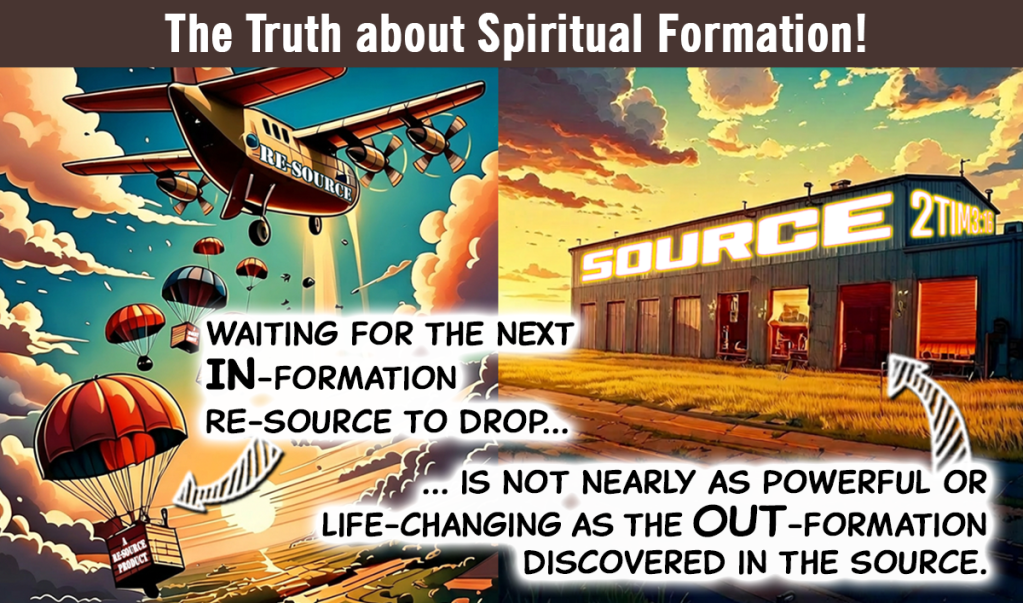
Solomon’s Quest is a leadership replicating framework that is better than any GPS you can buy, because as the leader, you experience life change in the process, setting the stage for God’s activity in the lives of those you lead.
It can be learned in a day, and it only gets better over time.
You don’t need Bible college or seminary.
You need His Word.
You don’t need a degree.
You need to be part of a self-learning cohort.
You don’t need to memorize anything.
You need to grow in comprehension of much.
You don’t need pages of notes to guide your group.
You simply need a framework and a 3×3 sticky note.
If you would like to change the destination of your group’s Bible experiences, reach out to us today at solmonsquest.org.

 Solomon's Quest
Leave a comment