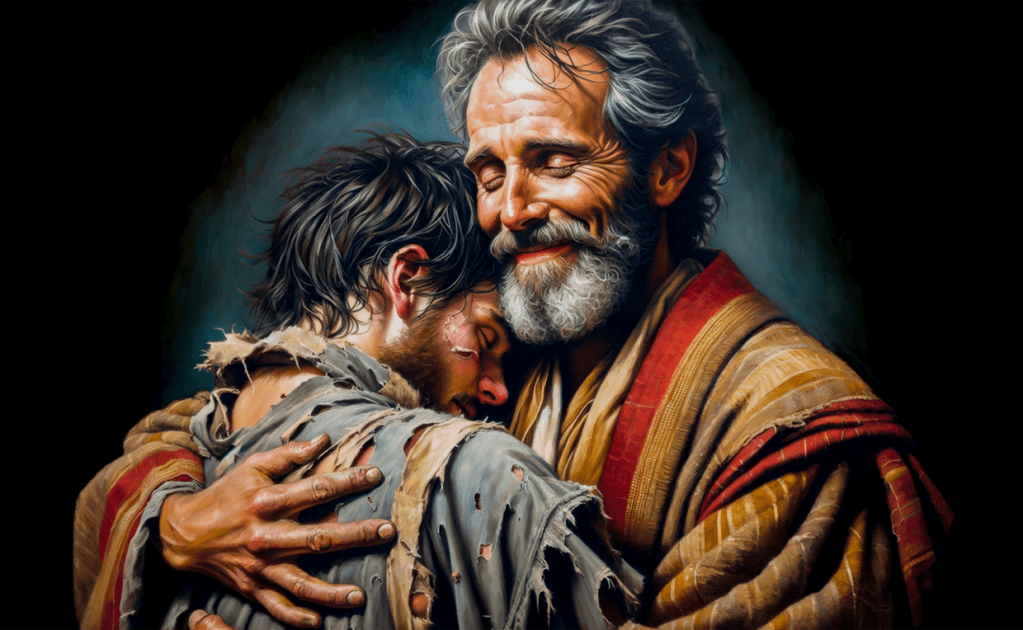
The Joy of Repentance
I was a lost church member. For years. Because my church told me I was a Christian. “Saved” was a word they did not use. That was not part of their lexicon. Oh, they believed that eternal life is real. But they also believed that it is vital to be baptized if one is to gain eternal life (I’m wondering now, as a thinking adult, if they really read the dialogue between Jesus and the thief on the cross: Luke 23-:40-43).
The problem was, I did not realize that I needed to think, understand, comprehend, analyze, and evaluate for myself, my need and my relationship with Jesus. (See https://solomonsquest.blog/2022/10/31/thinking-biblically-dialing-up-mature-disciples/)
In fact, what I thought I NEEDED, was to accomplish the church’s list for good Christians. And so I attended, took communion, participated in Bible study, served in various ways, bowed my head when they prayed and thought that meant I was praying. And even though this brand of church practices infant baptism (remember, it is vital), I was not baptized until I was almost a teenager. And that event occurred because I realized that I was the only one in my Sunday School class that had not been baptized. It had nothing to do with any realization that I needed Jesus. It was to do one more thing that was on the church’s list. I even attended 2/3s of the “required” confirmation classes after that (you know, where they “confirm” you are a Christian).
My family was not the church going kind until we moved to this town. I can only imagine that what prompted this turn of events was family. We had moved to this small town in North Carolina to take over the small country store that my mother’s father had owned. He had passed away, and it fell to her (and Dad) to continue this family business. But there was also family in this town. Church going family. Traditional, church going, family. I had aunts, uncles, cousins… I can only assume that going along to get along was part of the motivation for the inaugural religious exposure the four of us encountered. I am the third of the four.
Because my dad was Jewish (though agnostic), we spent some time at the Jewish temple in town. Apparently, my parents decided that they would let the kids decide, though that was really my older brother and sister, as my younger brother and I were too young to weigh in. After some time at the Jewish temple, we started going to the church brand that my mother and her family had grown up in. Mom’s participation stopped after a few years. As did that of all of my siblings. (Dad never went to church or Temple.)
But It was there that I learned that I was a “Christian”.
Because they said so.
Because I attended.
Because the church was a “Christian” church, those that attended were therefore “Christians”, proven by their baptism, communion, attendance, and service.
And because I didn’t know that my salvation depended on my personal comprehension of Christ and my response to Him, I went along with the “list”, assured that I was a Christian.
But while I believed that Jesus was God’s son (faith), I had no idea about Him wanting to be Lord of my life. Furthermore, and just as significant, I was less than clueless about the need for repentance.
At Fort Jackson, during my stint in Basic Training, Jesus invaded my life. It had nothing to do with my church attendance, baptism, communion, confirmation, or “brand” loyalty.
My salvation has been called “Pauline” – like Paul’s – because Jesus showed up and I fell to the ground because could not stand. I no longer wanted to be who I was… who I had become… who was the product of my culture and my religion and my ego and sin. I now only wanted to be what He wanted. I thought that was the only way out of where I was. I hated who I was and just knew that He could do a better job with my life than I had. I did not know that the word in the Bible to describe this attitude was “repentance”. But when I came to that point, the stunning invasion in my life was instantaneous and complete. I wept for reasons I did not understand. I experienced a peace that passed any understanding I had. I did not know that I had been “saved” because that word had never been used in that context in my church experience. (Maybe they used it in the third year of confirmation classes I missed.)
I share all this as background to speak into a contemporary misunderstanding related to the parable of the Prodigal Son.
Our current Christian culture sees repentant, born again Christians living gladly in the role of the prodigal – in the care and feeding of our loving and forgiving father who runs after us when our sin creates distance between us.
However, the parable is not about a born-again child of God sinning, and then returning. It is a story that illustrates the difference between the religious (Pharisees, Sadducees, Priests, etc. – the ones that live without thought, in the way the church tells them to live) and those who are being saved. In the beginning of the story, the prodigal is one that did not have a submissive, surrendered life with the Father. He was not “saved”. He went his own way, taking advantage of the kindness of his Father and abusing the wealth and resources provided by his Father.
Today, the celebration is about the return, that a backslidden Christian can return to a God that will run after them and celebrate their return, time and again, as often as they choose to sin and return. This image rightly allows for the grace and forgiveness of the Father. But it is not the true picture of the prodigal.
You see, it is not the return that is the cause for celebration. It is the turn before the return. In a culture where Christianity is defined by attendance, baptism, service, and Bible Study, the absence of repentance is rarely considered, and even more rarely comprehended.
Imagine with me if, instead of deciding that he would be whatever his Father wanted him to be (“… make me like one of your hired servants.” – Luke 15:19), he had chosen to return to get some good food and more money, just so he could go away and try to live his own life once again. Do you think we’d be reading about the first New Testament barbque? Hardly. What is important, what Jesus was telling us in the parable, is that religion is useless for a relationship with the Father. It just doesn’t matter what list the church has. What matters is your faith, your submission, and your repentance.
It was not the return that made the difference for the Prodigal. It was the turn before the return.
When a true prodigal (one that is lost) turns – repents – the Father is there for them to bring them, as a “new born”, into His family. There is never a thought that the prodigal would turn away again. In fact, when we evaluate our responsibilities as members of this forever family, it is not that we can trust God will continually chase us across the border, it is that now, as a member of his family, as a brother and friend to His Son, we now have the joy of helping run the family ministry, that more prodigals will turn, and come to the Family.
If you have never come to the place where you choose God’s plan for your life instead of your plan for your life, then you may have never repented. You may well have lived a life of faith – counting on God to provide for you, care for you, forgive you, empower you, and protect you from the consequences of your own life’s choices – just like the church told you. But if you don’t want to be like “one of [his] hired servants”, then please reconsider that Jesus proclaimed the need for repentance, not just in the parable, but everywhere he went (Matt 4:17).
It was not the return that made the difference for the Prodigal. It was the turn before the return.

 Solomon's Quest
Leave a comment